ABOUT
회사소개
고객지원
T. 02-858-5357
F. 02-859-5357
dhk5@hanmail.net
 HOME > 회사소개 > 중성미자논문
중성미자논문
Title of the Thesis: Truths of the Neutrino
The 1st Writer : DR. DAE HO KIM
1, Background of the Research:
Research on neutrinos, called the ghost of the Universe, has been linked to Nobel Prizes. In 1988, three American scientists were awarded the Nobel Prize for their observation of neutrinos emitted by particle accelerator, in 1956, American physicist Frederick Linus was awarded the Nobel Prize in Physics in 1995 for the first observation of neutrinos from a nuclear power plant. And Masatoshi Koshiba, a professor at the University of Tokyo in Japan, was awarded the Nobel Prize in Physics for observing neutrinos emitted when a supernova explodes at a neutrino observation facility in an abandoned mine where the 4,500 tons of water were contained, And his student, Professor Kajita Takaaki, was also awarded the 2015 Nobel Prize in Physics for his research on neutrinos. Even today, scientists are conducting research on neutrinos, which are called cosmic ghost particles, by planting 5,160 optical sensors under the thick ice of Antarctic. About 100 billion neutrinos pass an area of 1 square centimeter every second, and where and how these neutrinos originated is still a mystery.
To uncover the truth about neutrinos flying from space, the United States is investing $1billion, Japan is investing $800 million, China is investing $330 million, and India is investing $233 million. On August 16, the Republic of Korea also announced that the Underground Experimental Research Center(Dark Matter Research Center) of the Institute of Basic Sciences signed an MOU with Handeok Iron Mine in Jungseon-Gun, Gangwon province in Korea and invested 21 billion Won to build a space particle research facility under the Iron Mine.
2, Truths of the Neutrino
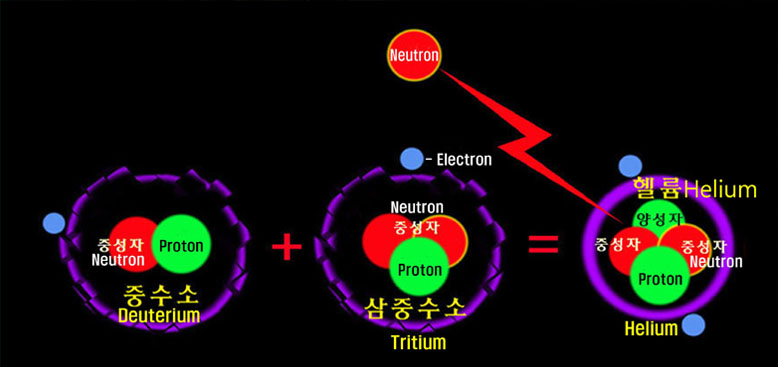
As shown in the image above, two hydrogen atoms combine to form one helium atom. At this time, one atomic shell disappears, and the fragment of this missing atomic shell is a NEUTRINO. The shell of a hydrogen atom is strong enough to collapse with enough energy to detonate a uranium atomic bomb. Therefore, in order to detonate a hydrogen bomb, the uranium bomb is detonated first.
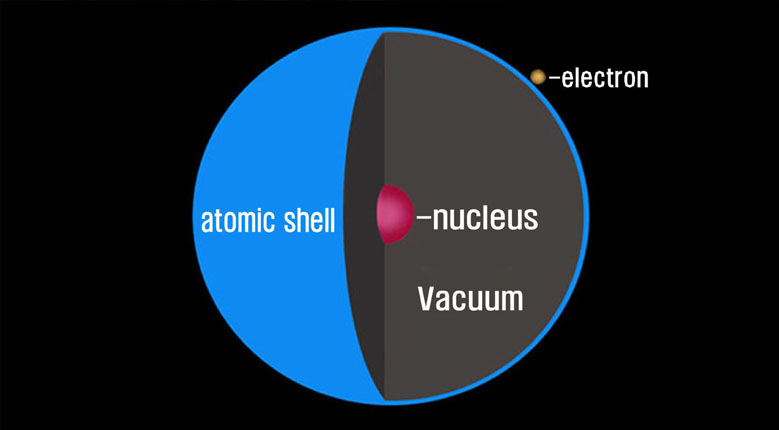
The image symbolically shows the shell of hydrogen atom. Without this shell, even planets like Jupiter could be luminous stars like the Sun. However, although Jupiter, like the Sun, is made up mostly of hydrogen, it cannot become a star because it does not have enough gravity to collapse the hydrogen atomic shell.
The reason is that the atomic shell must collapse to generate thermal energy through nuclear fusion and become a star. The problem is that there is no gravity enough to collapse the atomic shell. In addition, the force of gravity must be enough to detonate a uranium atomic bomb.

As shown in the figure left the hydrogen bomb puts deuterium and tritium raw materials in the center, and wraps the periphery with uranium. Then it detonates the uranium nuclear bomb by detonating the high-performance explosive that surrounds it, and by concentrating the explosive power of the uranium nuclear bomb in the center, it induces nuclear fusion by collapsing the atomic shells of deuterium and tritium. In other words, high explosives and the explosive power of a uranium atomic bombs are needed to collapse the shells of hydrogen atoms. In the early stages of star formation in the Universe, the gravitational force must be sufficient to cause the atomic shell to collapse.
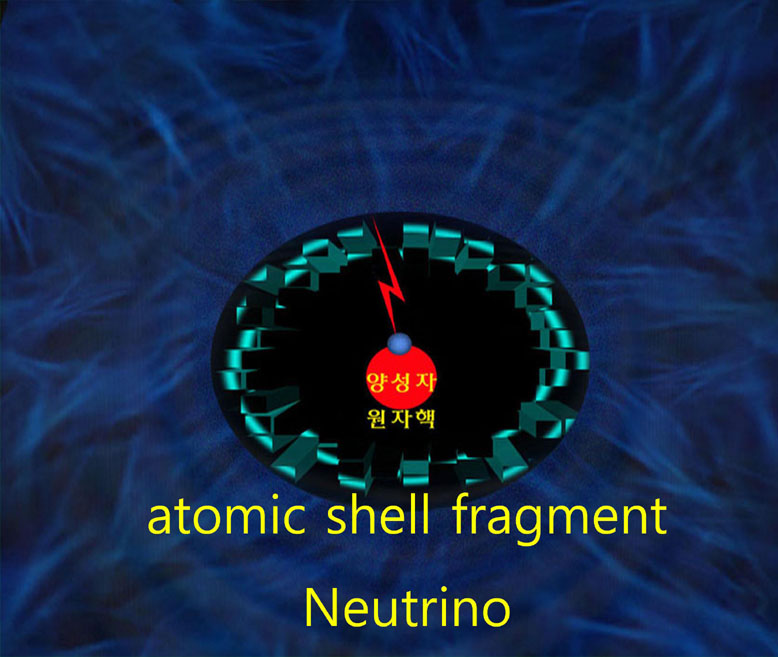
The image left symbolically shows the electrons being pushed into the nucleus as the shell, the protective film of the nucleus, collapses. At this time, the proton is converted into a neutron by capturing the incoming electron. In addition, neutrons combine with other protons to become deuterium. In this way, deuterium with one neutron and tritium with two neutrons are formed.

The image shows that neutral hydrogen and tritium combine to form one helium. At this time, one atomic shell and one neutron remain, and the fragments of the destroyed atomic shell are neutrinos. The first evidence is that neutrinos are electrically neutral just as atomic shells are electrically neutral. And the second evidence is that neutrinos emanating from the Sun are also electrically neutral. At the center of the Sun, about 700 million tons of hydrogen undergo nuclear fusion per second. In addition, a huge amount of fragments of the destroyed atomic shell are emitted out of the Sun, and the fragments are observed as neutrinos.
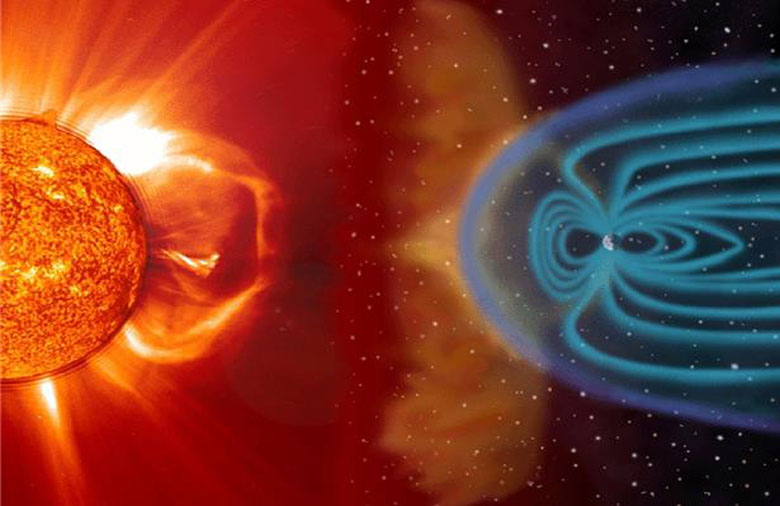
The source of the solar wind (provided by NASA) is the nuclear fusion of hydrogen atoms. Without hydrogen fusion in the Sun, there would be no solar wind. Like the sun, Jupiter is mostly made of hydrogen, but since it cannot undergo nuclear fusion, its atomic shell does not collapse and therefore it does not emit neutrinos.
In nuclear fusion, fragments of the disintegrating atomic shell are formed. Therefore, if you trace the source of the neutrinos pouring out of the solar wind, you will encounter the fragments of the atomic shells generated during the hydrogen fusion process.
A third piece of evidence is the neutrinos that occur with supernova explosions. Before a supernova explodes, the core of a star is made of iron atoms. Iron atom have a stable structure that can best withstand gravity. However, among the mechanisms such as gravity – high density – ultrahigh temperature – explosion energy, the iron atom shell collapses.
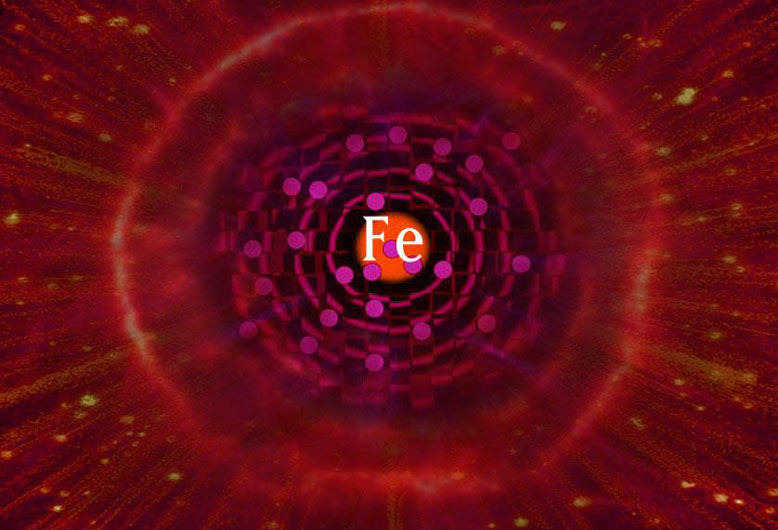
The figure above symbolically shows how the extremely compressed iron atomic shell collapses, and electrons from outside the atomic shell are pushed into nucleus when a star that is more than 10 times the mass of the Sun explodes. And the electrons pushed into the nucleus like this, combine with the protons that make up the nucleus and are converted into neutrons. The nucleus of an atom is made up of protons and neutrons.
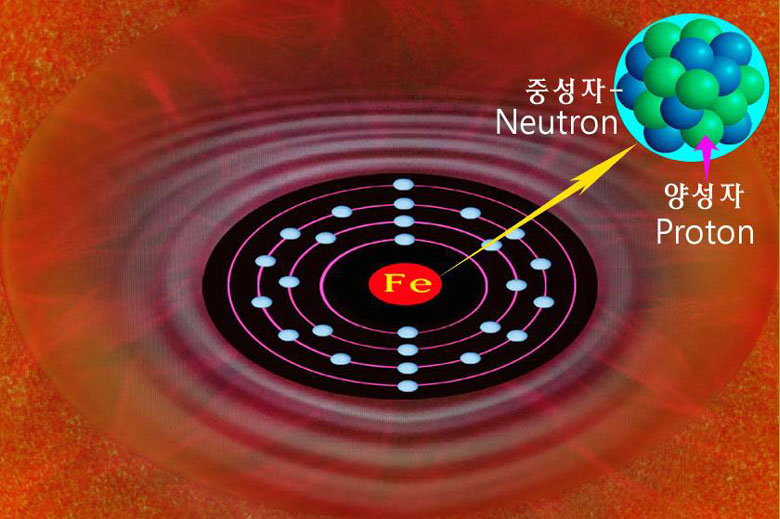
As shown in the figure above, the nucleus of an atom consists of protons and neutrons. When the atomic shell collapses, electrons are pushed into the nucleus and combine with protons to be converted into neutrons. Thus, the nucleus of an atom is made up only of neutrons.
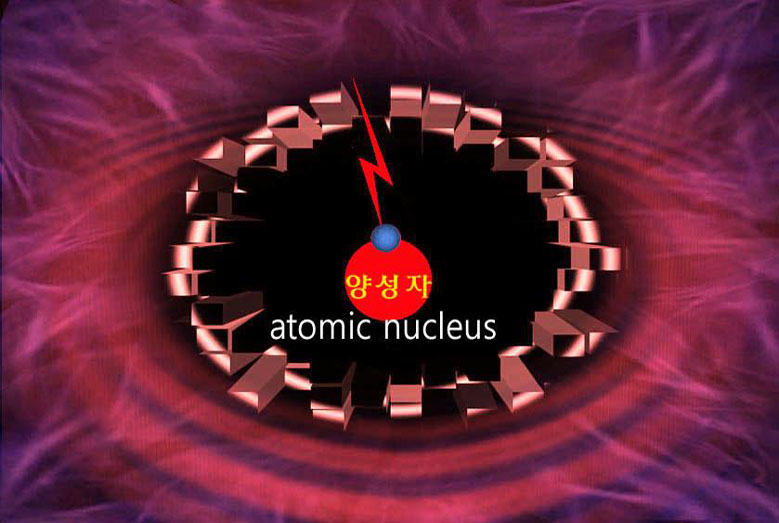
The image above symbolically shows the bonding of electrons and protons pushed into the nucleus as the atomic shell collapses. When protons and electrons combine, they are converted into neutrons. A neutron star is a celestial body with an extremely compressed nucleus of these neutrons. In other words, neutrons are not emitted and become extremely compressed to become the nucleus of a neutron star.
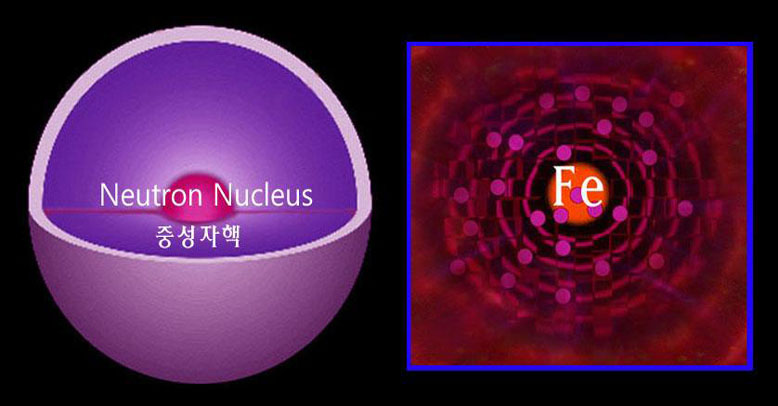
The above image symbolically shows the collapse of the core of a neutron star and the iron-atomic shell. In this way, neutrons become extremely compressed and become the nucleus of a neutron star, and fragments of collapsed iron atomic shells are released into space, and the fragments are the substance of neutrinos.
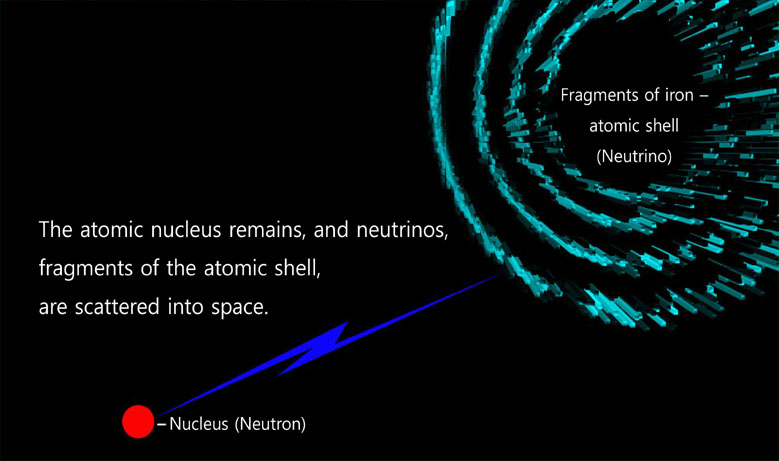
The image above symbolically shows how fragments of the collapsed atomic shell are scattered into space, leaving only the atomic nucleus. These atomic shell fragments are made up of neutrinos. So, when a star called a supernova explodes, many neutrinos are blown back to Earth.
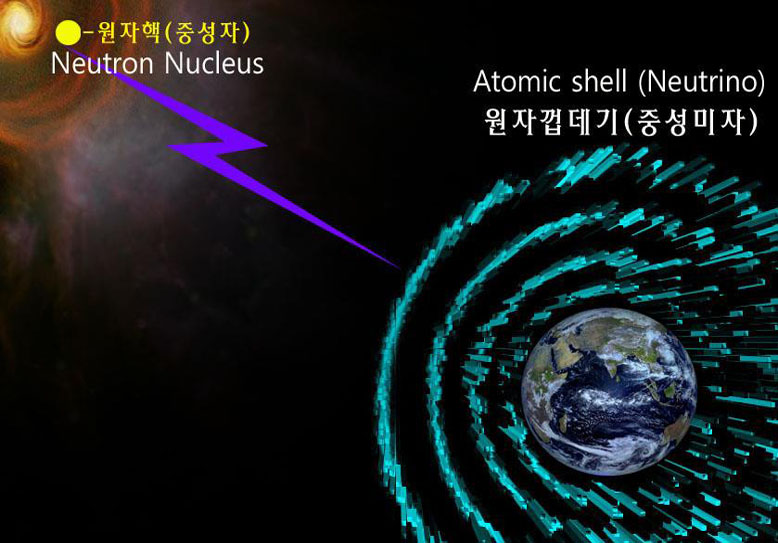
The above image symbolically shows how a supernova explodes, leaving atomic nuclei behind and neutrinos, fragments of the atomic shell, fly to Earth. On February 23, 1987, a supernova exploded 170,000 light-years from Earth. And traveling a long distance of 170,000 light-years, a huge amount of neutrinos reached the Earth.
Among them, about one trillion neutrinos reached the water tank of the underground laboratory of Masatoshi Koshiba, a Japanese astrophysicist and Nobel Prize Winner in physics.
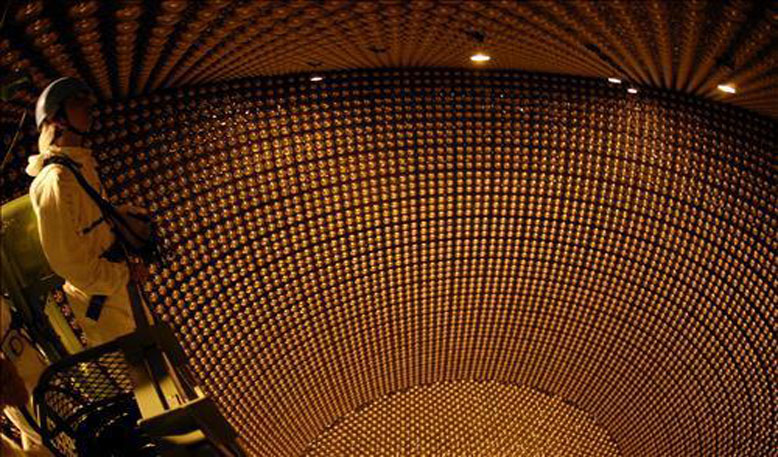
The picture above is of an underground laboratory in Japan, where about one trillion neutrinos have arrived.
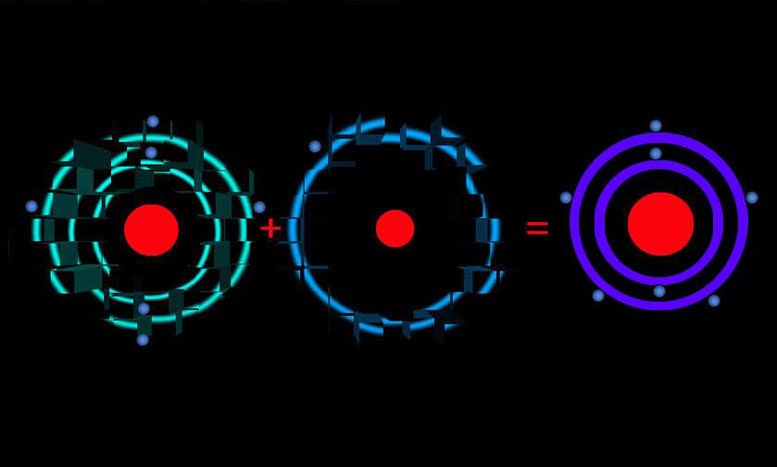
The image above symbolically shows how two atoms combine to form an atom with a heavier mass through nuclear fusion. When a heavy atom is formed through nuclear fusion, the atom forms a thicker protective layer to protect the nucleus from gravity. And in proportion to the mass of the nucleus, several layers of protective film are formed. The material produced before the supernova explosion is as follows: 1, hydrogen, 2, helium, 3, lithium, 4, beryllium, 5, boron, 6, carbon, 7, nitrogen, 8, oxygen, 9, fluorine, 10, neon, 11, sodium, 12, magnesium, 13, aluminum, 14, silicon, 15, phosphorus, 16, sulfur, 17, chlorine, 18, argon, 19, potassium, 20, calcium, 21, scandium, 22, titanium, 23, vanadium, 24, chromium, 25, manganese, 26, iron.
The above atoms are made through nuclear fusion, and with nuclear fusion, the original atomic shell collapses and a new atomic shell is formed. In addition, in this process, a large amount of neutrinos, which are atomic shell fragments, are emitted.
3. Neutrinos and Black holes
Many neutrinos are also emitted from the black hole, the central core of the galaxy. To realize this truth, it is necessary to understand the tectonic mechanism of black holes. In addition, in order to know the structure of a black hole, it is necessary to understand the structure of a neutron star. The core of a neutron star is made up of compressed neutrons, and the neutron star’s exterior is surrounded by extremely compressed iron-atoms.
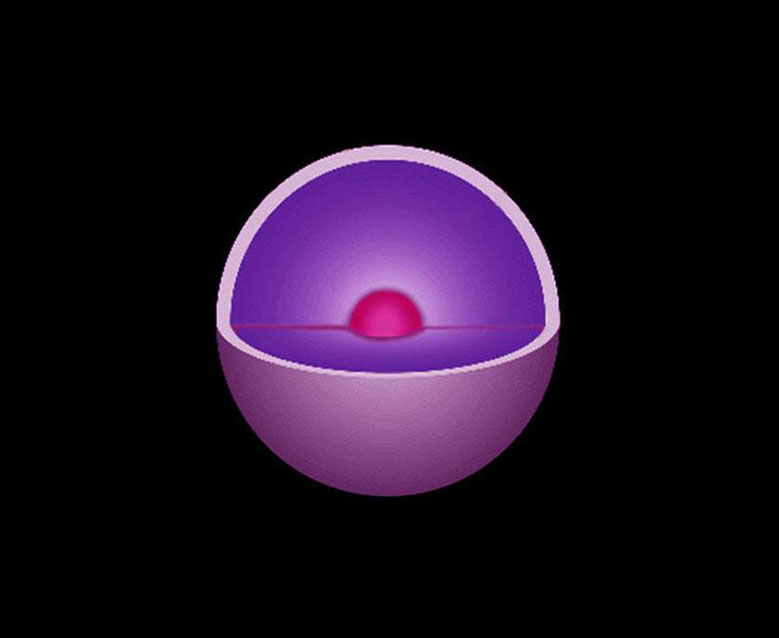
The above image symbolically shows the structure of a neutron star, whose shell is covered with extremely compressed iron-atoms. This is because iron-atoms have a stable structure that can best withstand gravity. When a neutron star attracts and swallows another star, the mass and gravity of the swallowed star are transferred to the neutron star, further compressing the neutron star’s core. And the material transferred from the star wraps around the neutron star, forming thermal expansion-energy inside the neutron star. As a result, the neutrons at the core of the neutron star collapse, eventually forming a black hole.
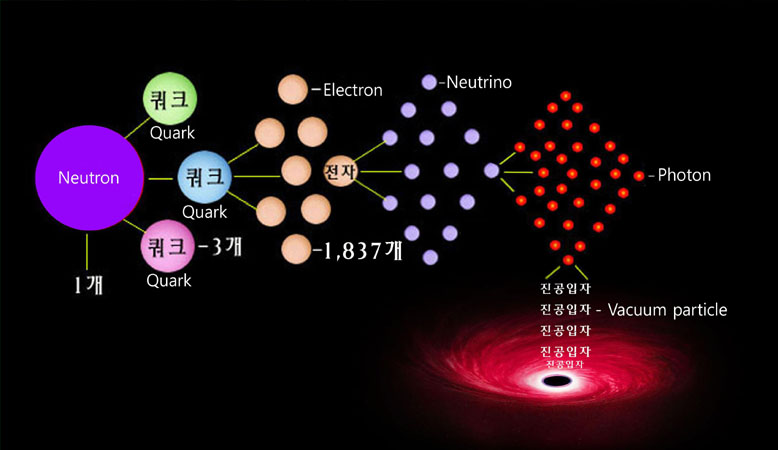
As shown in the image above, 1 neutron decays into 3 quark particles, the quark particle decays into 1,837 electrons, the electron decays into neutrinos, and the neutrinos decay into photons. and finally the photons decay into vacuum particles (Original particle). And the last remaining vacuum particles form an extremely compressed nucleus, and this celestial body is a black hole. In this way, the nucleus of a black hole is extremely compressed with vacuum particles (Original particles), surrounded by neutrons, and outside it is surrounded by iron-atoms, which have a stable structure that can best withstand gravity.
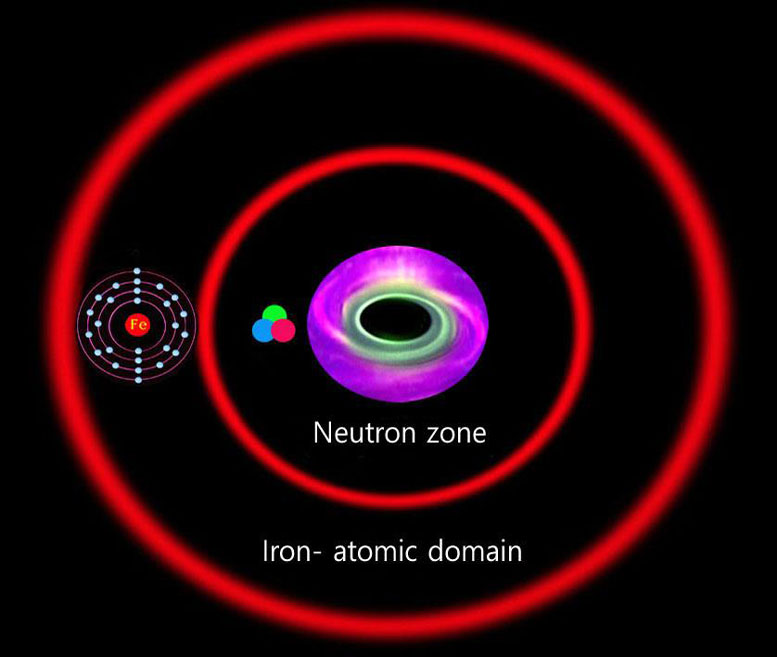
The figure above symbolically shows the structure of a black hole
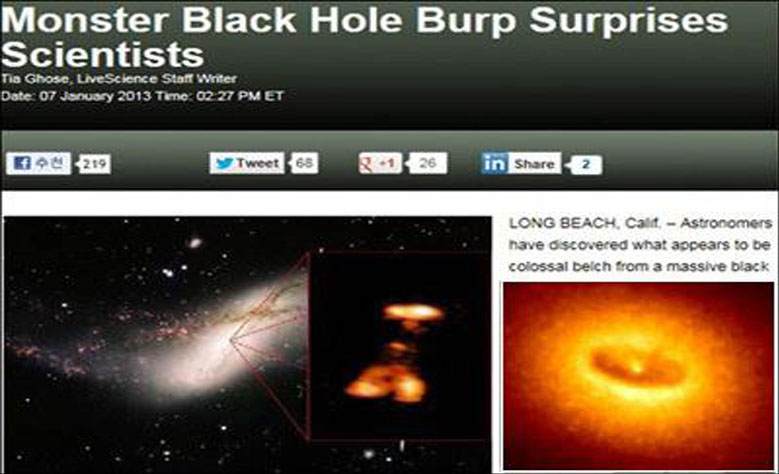
On January 7, 2013, in the above photos (provided by NASA) published in scientific media such as Space.com, the bright dot in the center is a ring-shaped accretion disk, and a black hole is located in it. The photo shows the first disk ring around the black hole, and another disk ring outside it. The black hole was discovered by a team led by Dr. Robert Minchin of the Arecibo Observatory in the United States. And the black hole rings they discovered were created by the black hole where the Vacuum particles are extremely compressed, and the neutron and iron-atomic regions. However, at the time they did not reveal the truth about these black hole rings. The black hole structure forms a super strong electric field, and the charged particles that make up the electric field are charged with the charged particles of matter drawn into the black hole.
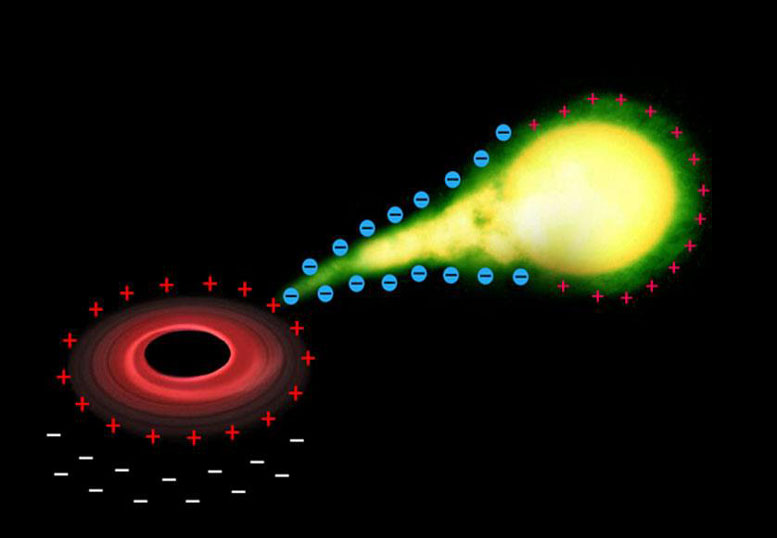
As shown in the image above, the electric charge surrounding the black hole is charged with the charge of the cosmic matter attracted to the black hole. So, at this time, a spark with tremendous energy is generated. The volume of the atoms that make up the cosmic matter is like a balloon that is 100,000 times larger than the neutrons surrounding the black hole. Much larger than the tightly compressed iron-atoms surrounding the neutron zone outside the black hole.
As a result, cosmic matter cannot penetrate the strong barrier and enter the black hole.
In addition, cosmic matter that is pushed by gravity and reaches the vicinity of the black hole is put under the tremendous pressure by that gravity. However, cosmic matter with no other way out will orbit the black hole to form an accretion disk. In this process, the innermost atoms, which are most strongly compressed, decay and enter the black hole through the neutron region, expanding the black hole’s mass.

The above image symbolically shows the collapse of the atomic shell and the collapse of the quark particles that make up the atomic nucleus.

The image above symbolically shows the process by which one proton decays down to photons.
In the process of proton decay, one electron decays into about 1 billion neutrinos. Therefore, so many neutrinos are generated in the process of electron decay. And also, a huge amount of neutrinos are generated as the atomic shell collapses. And most of these neutrino particles are emitted.
Black holes emit matter in excess of the mass proportional to the galaxies. And when a black hole ejects matter to match its mass, charged particles that were charged with the charge of cosmic matter recede back. And charged particles with the same polar properties as cosmic matter come out and forcefully repel cosmic matter. Thus, the repulsive force that repels the same poles acts.

The image above symbolically shows how the arrangement of charged particles around black hole changes, pushing out cosmic matter. As such, the magnetic field surrounding the black hole also plays a major role in emitting cosmic matter.
The galaxy rotates around the axis of rotation of the black hole in the central core of the galaxy

And black holes have super strong magnetic fields. This is evidence that a magnet with strong magnetic force exists in a black hole. And it is true. Black holes are surrounded by ring-shaped circular magnets.
Ring-shaped magnet
The image symbolically shows a ring-shaped magnet surrounding a black hole. In black holes, there are super-large magnets with super-strong magnetism in the shape of a ring. The iron surrounding the outermost layer of a black hole is a giant ring-shaped circular magnet. The same goes for the neutron region surrounding the black hole. The axis of rotation is formed in the direction of the pole of the magnet, and the galaxy rotates around that axis. In addition, particles are emitted in the direction of the rotation axis of the black hole.

The image above shows a comparison between a ring-shaped magnet and a jet of a black hole symbolically. As such, a black hole is surrounded by a giant ring-shaped magnet, which acts as a jet that ejects particles toward the poles of the magnet.
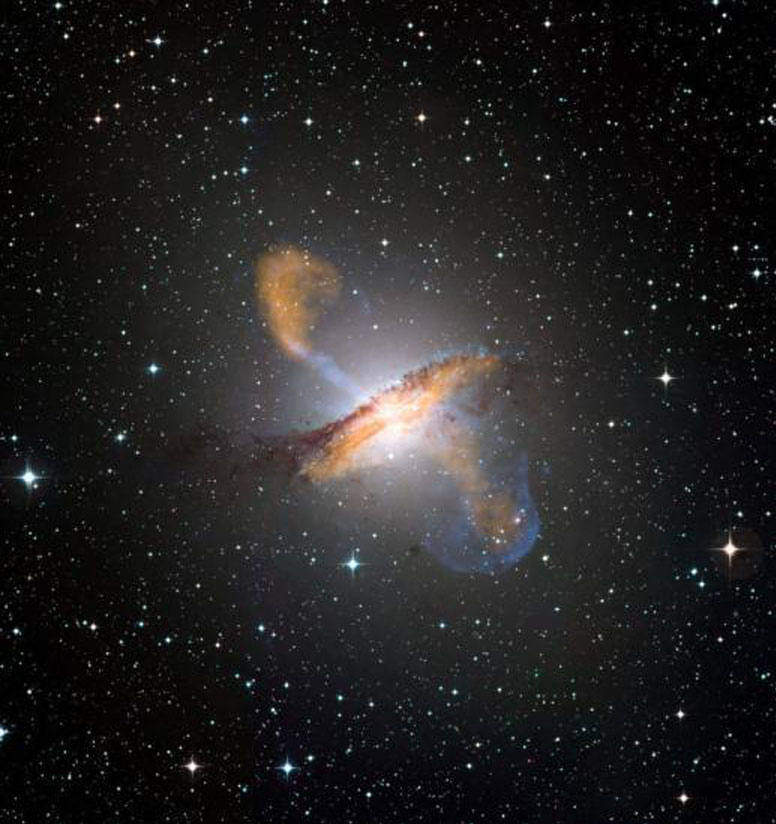
As seen in the above observations provided by NASA, particles are emitting from the galaxy’s core-black hole. Known as Centaur-A, the galaxy’s core-black hole is estimated to have a mass of 55 million
solar masses. This is because the material emitted from the black hole contains a large amount of neutrinos, and when one electron decays in the black hole structure, about 1 billion neutrinos are created. And these neutrinos are flying to Earth.
4. Neutrinos and Reactor
When uranium atoms fission in a nuclear reactor, many neutrinos are also produced.
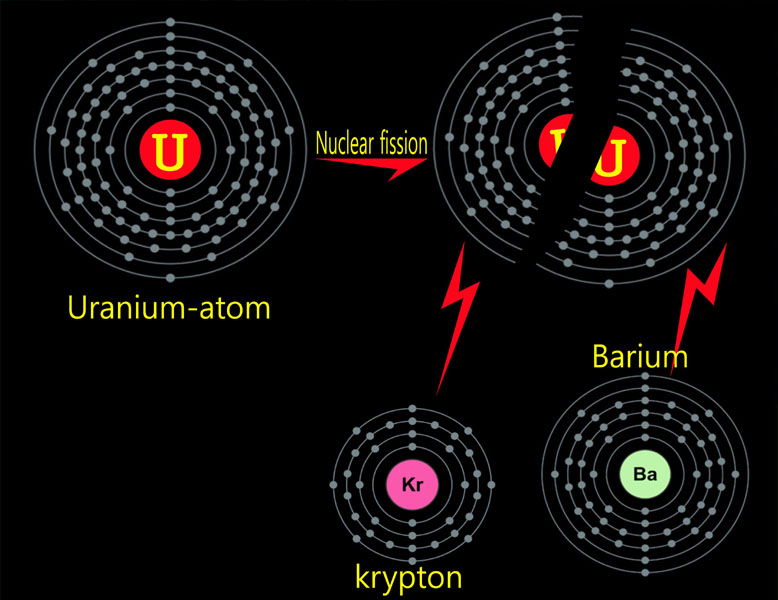
The above image symbolically shows how the uranium-atom collapses into two and a krypton-atom and a barium-atom are created. The fission of a uranium-atom means that the atomic shell surrounding the uranium-atom’s nucleus collapses. And the fragments of the atomic shell are the neutrinos. Therefore, many neutrinos are detected near the nuclear reactor.
5. Neutrinos appearing in the atmosphere
When the processed particles collide in the vacuum of the particle accelerator, various particles are created according to the energy value generated at that time. The original-particles that make up the vacuum of the particle accelerator combine as much as they gain anergy, appearing and disappearing with various masses. And the moment these particles lose energy, they disintegrate and return to the original particles and disappear. Likewise, when particles flying from space collide with particles in the Earth’s atmosphere, the energy generated at that time creates particles with different masses and neutrino appear. These original-particles that make up black hole vacuums, general vacuums, and the infinite space vacuum of the universe always combine as much energy as they get and appear with various masses. The physical phenomena of all forms of energy expression and annihilation are physical phenomena resulting from the various roles of the Original-particles.
The truth of neutrinos, which are fragments of atomic shells destroyed during nuclear fission or nuclear fusion, will be clearly and unambiguously revealed through particle accelerator experiments. It will be and we look forward to seeing it with our own eyes.